
Rutherford County Criminal Court Records
A Rutherford County criminal court record is the court-maintained case file, not merely the arrest record. It begins when criminal process or charges are filed and is maintained by the Clerk of Superior Court for the Superior Court and District Court divisions. District Court generally handles misdemeanors, infractions, preliminary lower-level matters, and some initial appearances. Superior Court handles felony criminal cases and appeals from District Court.
Magistrates are important at the front end because they handle warrants, initial criminal matters, and some preliminary process. The District Attorney then prosecutes state criminal cases in Prosecutorial District 41. The full case record can include charging papers, hearing entries, motions, plea or trial activity, disposition, sentencing, financial obligations, probation-related items, and appeal activity. For the arrest-to-charge pathway itself, use the court charge page; for the broad public case index, use Rutherford County court records.
Search Rutherford County Criminal Cases
Criminal case lookup starts with the North Carolina eCourts Portal. Smart Search can show public criminal case summaries and Register of Actions entries. Search Hearings can show current hearing locations and times. Judgment Search may show judgment index entries. Rutherford County went live in eCourts on October 13, 2025, so online search is now a central access channel, but it is not the only channel.
If the portal is blocked, incomplete, or too thin, use a public self-service terminal at a clerk of court office. The Judicial Branch says criminal case information can be searched by defendant name, case number, or victim/witness name from those terminals. Paper files and certified copies route to the clerk in the county where the case is located. Criminal background checks should be handled at the clerk's office rather than relying only on portal results.
The NC DAC Offender Public Information search form is a state custody and supervision source, not a substitute for Rutherford County criminal court records.
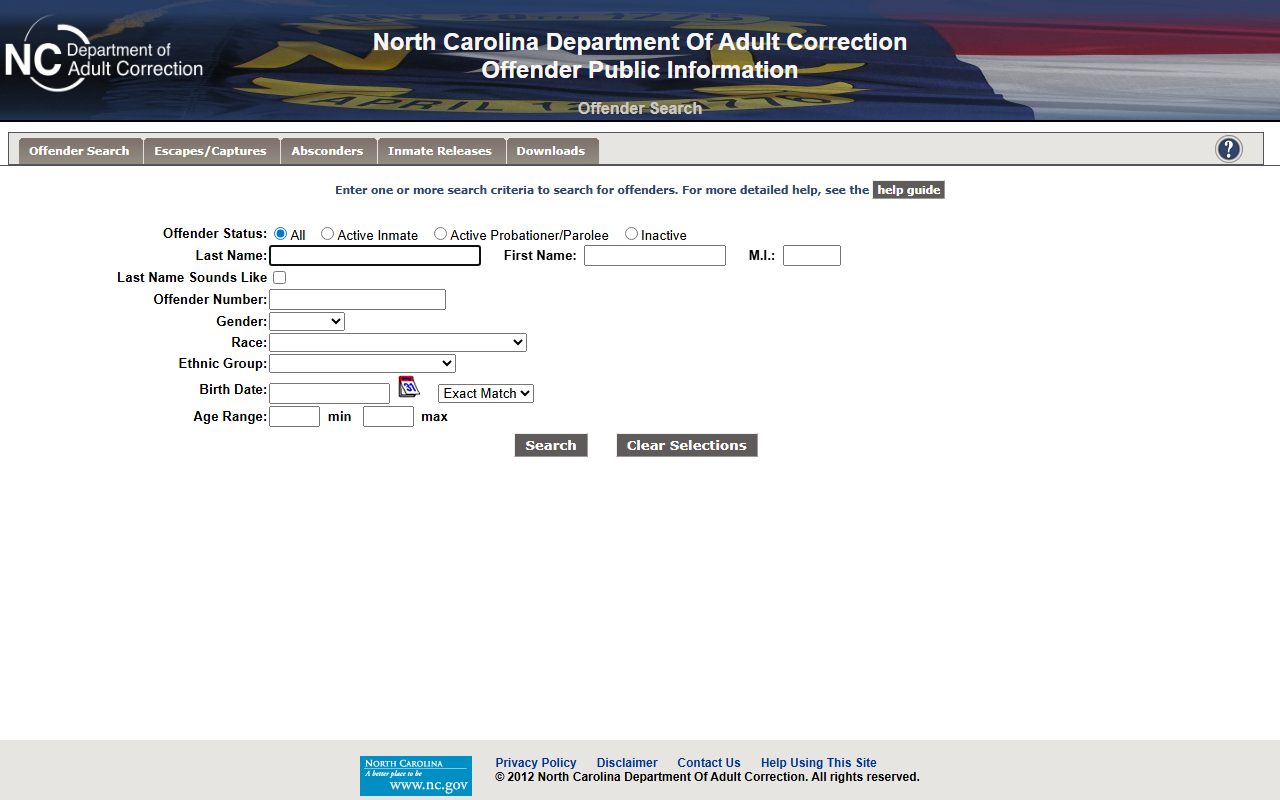
Use DAC offender search for prison, probation, or parole information after court action, then use eCourts or the clerk for the actual criminal case file.
- Open eCourts Portal and use Smart Search for the criminal case record.
- Search by defendant name or case number, then filter by Rutherford County and criminal case type if needed.
- Open the case summary and review the Register of Actions for hearings, motions, disposition, and sentence entries.
- Use Search Hearings if the immediate question is the next court date or hearing location.
- Request certified copies or paper-file review from the Clerk of Superior Court when the online summary is not enough.
Rutherford County Criminal Case Flow
Criminal court records make more sense when read as a sequence. A charge may appear first after a warrant, citation, indictment, or other criminal process. The case then moves through early appearances, arraignment, pretrial hearings, motions, plea negotiations, trial settings, disposition, and sentencing. Not every case has each event. A misdemeanor may resolve in District Court, while a felony may move into Superior Court and show indictment or trial calendar entries.
Case flow: Charges Filed › Arraignment › Pretrial / Motions › Plea or Trial › Disposition › Sentencing
| Stage | What the Record May Show |
|---|---|
| Charges filed | Offense name, case number, process type, charge class, and initial court division. |
| Arraignment | The defendant's formal response to charges, commonly guilty, not guilty, or another plea entry. |
| Pretrial / motions | Continuances, bond issues, discovery-related events, suppression motions, notices, and orders. |
| Plea or trial | Plea agreement, bench or jury trial activity, verdict, dismissal, or acquittal entries. |
| Disposition and sentencing | Outcome, sentence terms, probation, fines, costs, restitution, and appeal entries when public. |
What Rutherford Criminal Records Show
A Rutherford County criminal court record may contain both summary fields and detailed docket activity. The online record may not show every document image. The clerk file may be needed for pleadings, orders, notices, or certified copies. Some fields are withheld or redacted, especially personal identifiers, juvenile information, mental-health records, and sealed or expunged matters.
| Field | What It Shows |
|---|---|
| Case number | The court's unique identifier, including year, case type letters, sequence, and county code format. |
| Defendant | The accused person, with restricted personal identifiers removed from public display. |
| Charges | Filed offenses, charge class, amended charges, dismissed counts, or superseding indictment details when public. |
| Hearings | Court dates, hearing type, courtroom, judicial officer, and continuances when available. |
| Disposition | Dismissed, guilty, not guilty, deferred, disposed, appealed, or other outcome language. |
| Sentence | Probation, jail or prison terms, fines, costs, restitution, and related financial obligations when public. |
| Warrant or FTA events | Failure-to-appear, order-for-arrest, bond, or compliance activity if entered in the case. |
Charges vs Convictions
A charge is an accusation. A conviction is a guilty plea or guilty finding accepted by the court. Rutherford County criminal court records can show charges that were later dismissed, reduced, amended, superseded by indictment, or resolved by not-guilty verdict. That is why the disposition field matters as much as the charge list.
| Point | Charge | Conviction |
|---|---|---|
| Meaning | A filed criminal accusation. | A guilty result by plea or verdict. |
| Record location | May appear early in the court file and sheriff or warrant material. | Appears in the disposition and sentence part of the court record. |
| Can change? | Yes, charges can be amended, reduced, dismissed, or added. | Can be appealed or later affected by expunction if the law allows. |
| Use in background checks | Needs careful reading and final status review. | Needs case-number, sentence, and disposition verification. |
Rutherford Criminal Docket Roles
The District Attorney for Prosecutorial District 41 is Ted Bell. The office represents the State of North Carolina in criminal cases for Rutherford and McDowell Counties, protects victims and their rights, prosecutes criminal cases, prepares the criminal trial docket, and advises law-enforcement officers. Juvenile matters and less serious offenses such as misdemeanors and infractions are usually prosecuted in District Court; serious offenses such as felonies usually proceed in Superior Court.
The Prosecutorial District 41 page gives the official Rutherford County District Attorney context.
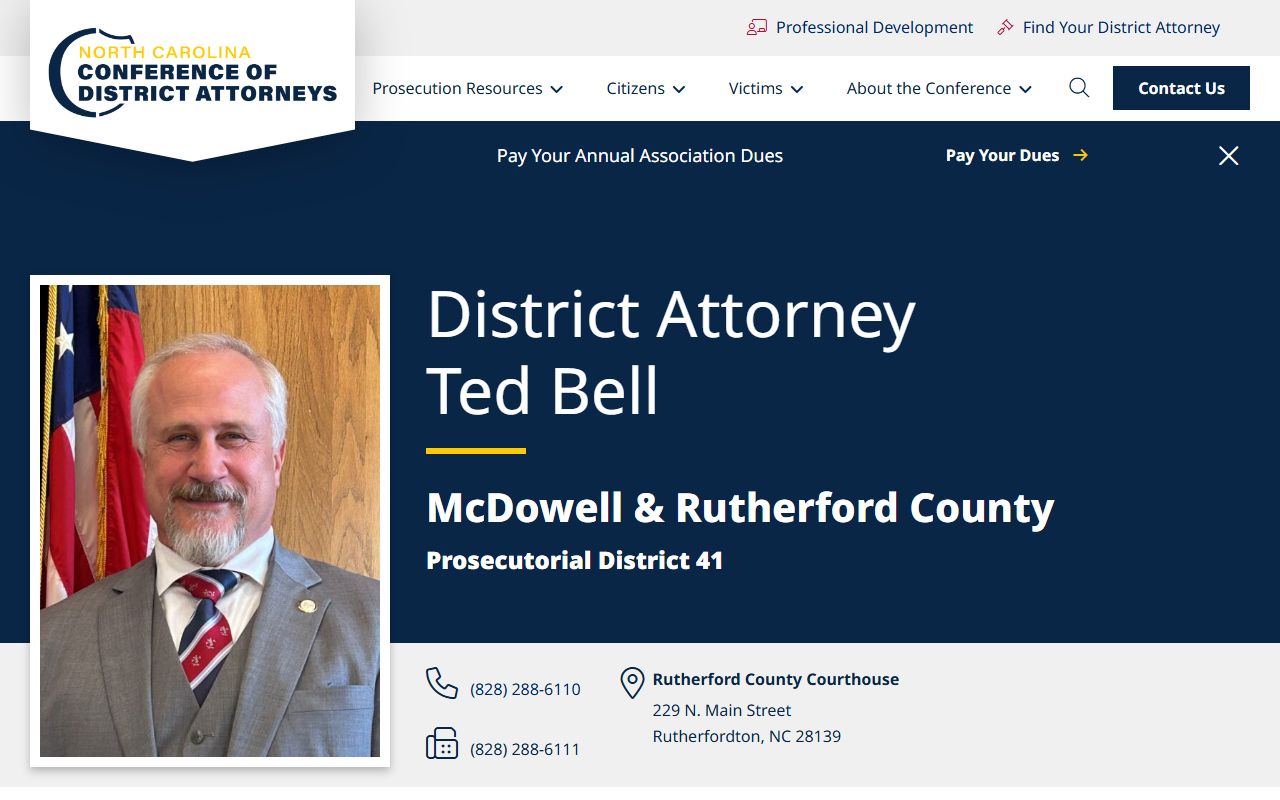
The District Attorney's docket role explains why criminal court records often show continuances, plea settings, trial calendars, and disposition entries tied to prosecution decisions.
Rutherford County is also in Defender District 41. The Public Defender is Laura A. Powell, and the Public Defender Office phone is 828-288-6123 at the courthouse address. Indigent Defense Services says users can call the public defender office to find out whether they have a lawyer, and lawyer contact information can be checked through the NC Bar portal when the attorney name is known.
Access to Rutherford Criminal Records
Criminal court records are generally public when not restricted by a specific law, court order, or confidentiality rule. North Carolina's Public Records Act gives the general open-records framework, while court records and clerk indexes are governed by Chapter 7A and Judicial Branch procedures. Criminal background checks should be conducted through the clerk office rather than by treating a portal result as a complete criminal history.
The NC Department of Adult Correction offender-search page lists state offender locator, automated system query, NC SAVAN/VINELink, sex offender registry, and law-enforcement search tools.
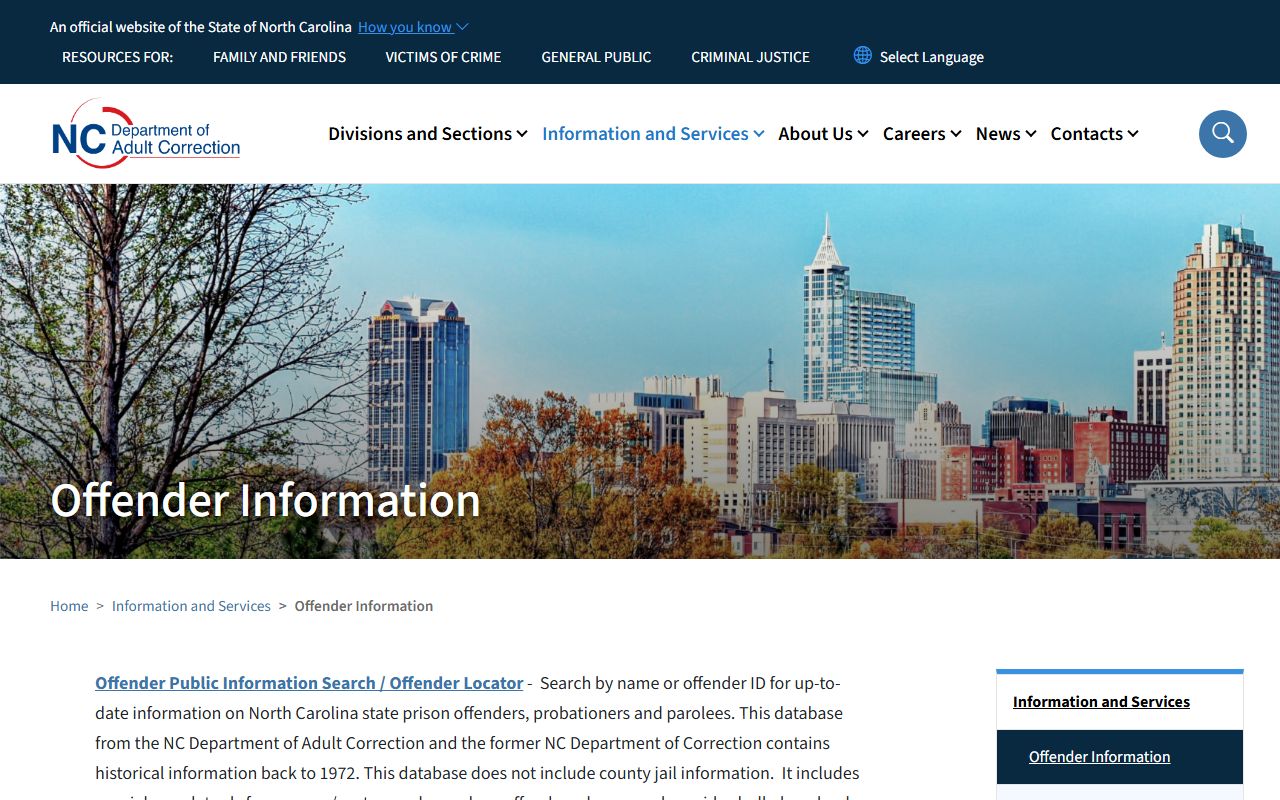
Those state searches help after conviction or supervision, but the Clerk of Superior Court remains the source for the Rutherford County criminal case file.
Note: Portal registration does not grant access to sealed, juvenile, expunged, or otherwise restricted Rutherford County criminal court records.
Sealed vs Expunged Criminal Records
Restricted criminal court records fall into several groups. Juvenile delinquency records are confidential even though some juvenile hearings may be open. Adoption and involuntary hospitalization records are confidential court categories. Personal identifiers are redacted from public records. Sealed and expunged criminal records are removed from ordinary public access only when a statute and court order support that result.
The NC Judicial Branch juvenile delinquency page explains the special confidentiality rules for juvenile court records.
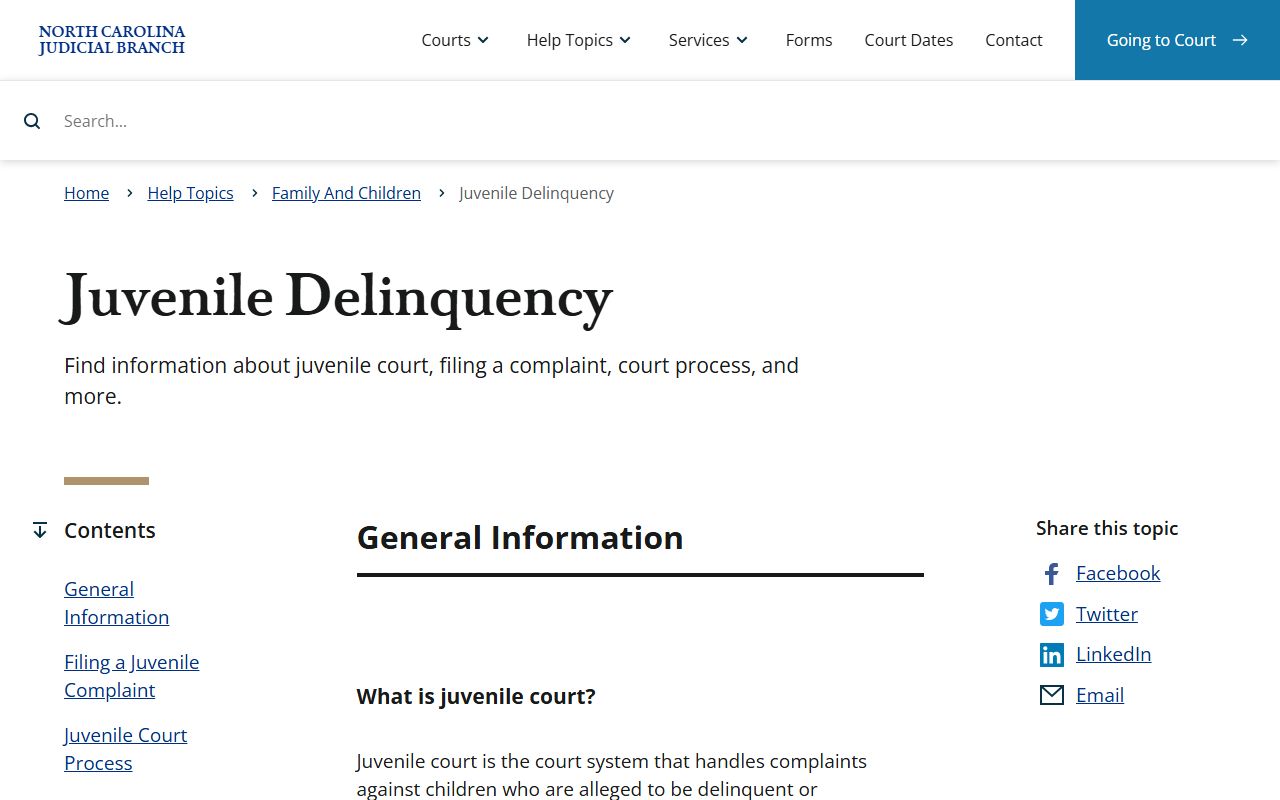
Juvenile confidentiality is one of the main reasons a criminal-looking court matter may not appear in ordinary public search results.
| Point | Sealed | Expunged |
|---|---|---|
| Public visibility | Hidden from ordinary public inspection by law or court order. | Removed from public access under a qualifying expunction order. |
| How it happens | By confidentiality rule, sealing order, or restricted case type. | Through a statutory petition or process under Chapter 15A, Article 5. |
| Eligibility | Depends on case type, statute, and order. | Depends on offense, age, disposition, prior record, waiting period, and costs or restitution. |
| Practical step | Ask the clerk what process applies to the case type. | Identify exact case numbers and dispositions before filing any petition. |
The North Carolina expunction statutes control when a criminal record may be removed from public access.
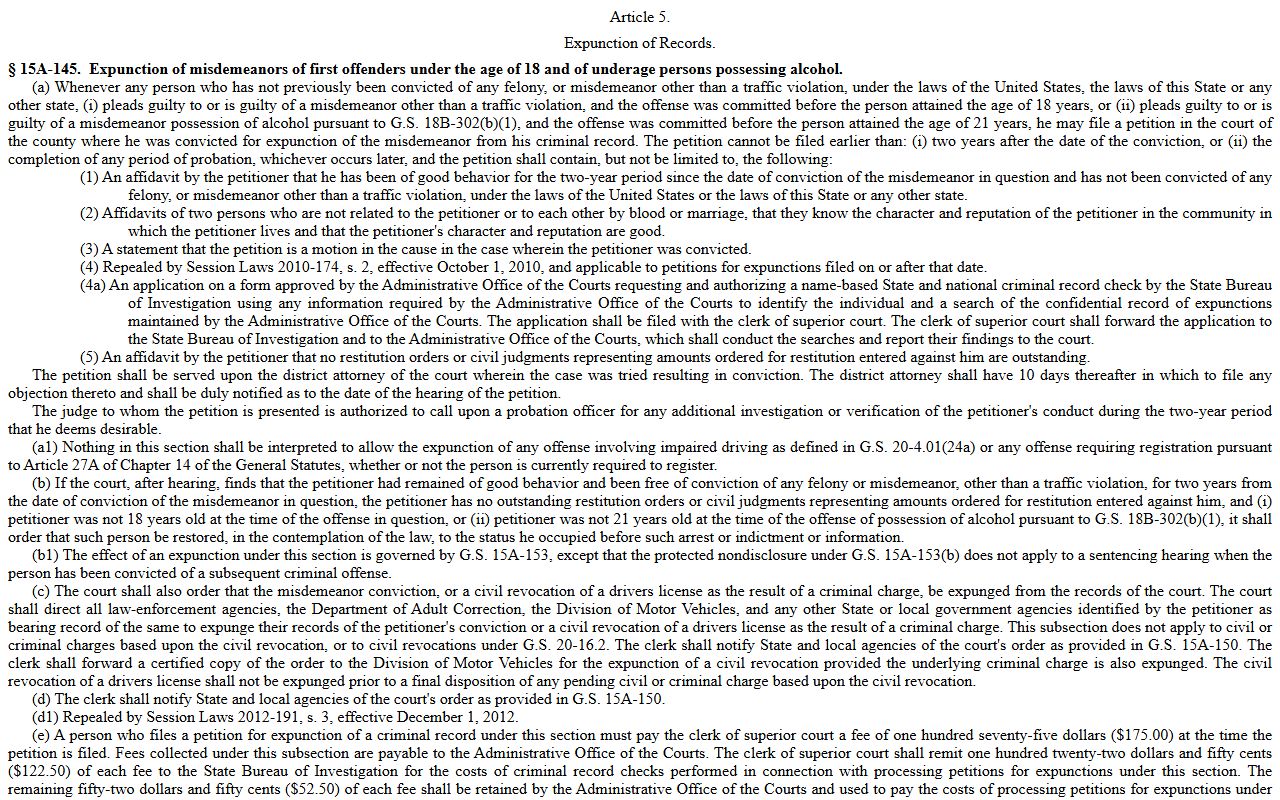
Expunction eligibility is technical, so the record should be checked against the exact statute, case number, charge, and disposition.
Public Record Search
Sponsored Results