
Rutherford County Probate Records Overview
North Carolina estates are handled primarily in the office of the appropriate Clerk of Superior Court, not in a separate probate court. In Rutherford County, the local office is the Rutherford County Clerk of Superior Court. Estate administration is the court process for handling a person's assets and debts after death. Some estates require full administration, while many smaller estates may use simpler procedures if the facts fit state law.
Full administration begins when the clerk gives authority to a personal representative. If there is a will, that person may be an executor. If there is no will, the appointed person may be an administrator. The personal representative inventories assets, gives public notice to creditors, pays valid debts, and distributes remaining property to the people named in the will or to heirs entitled by law. Clerk staff can receive filings and maintain records, but the county court page warns that clerk staff cannot practice law, fill out forms, or advise on legal consequences.
The NC Judicial Branch estates help topic describes full administration, small estate options, personal representatives, inventories, creditors, and distributions.
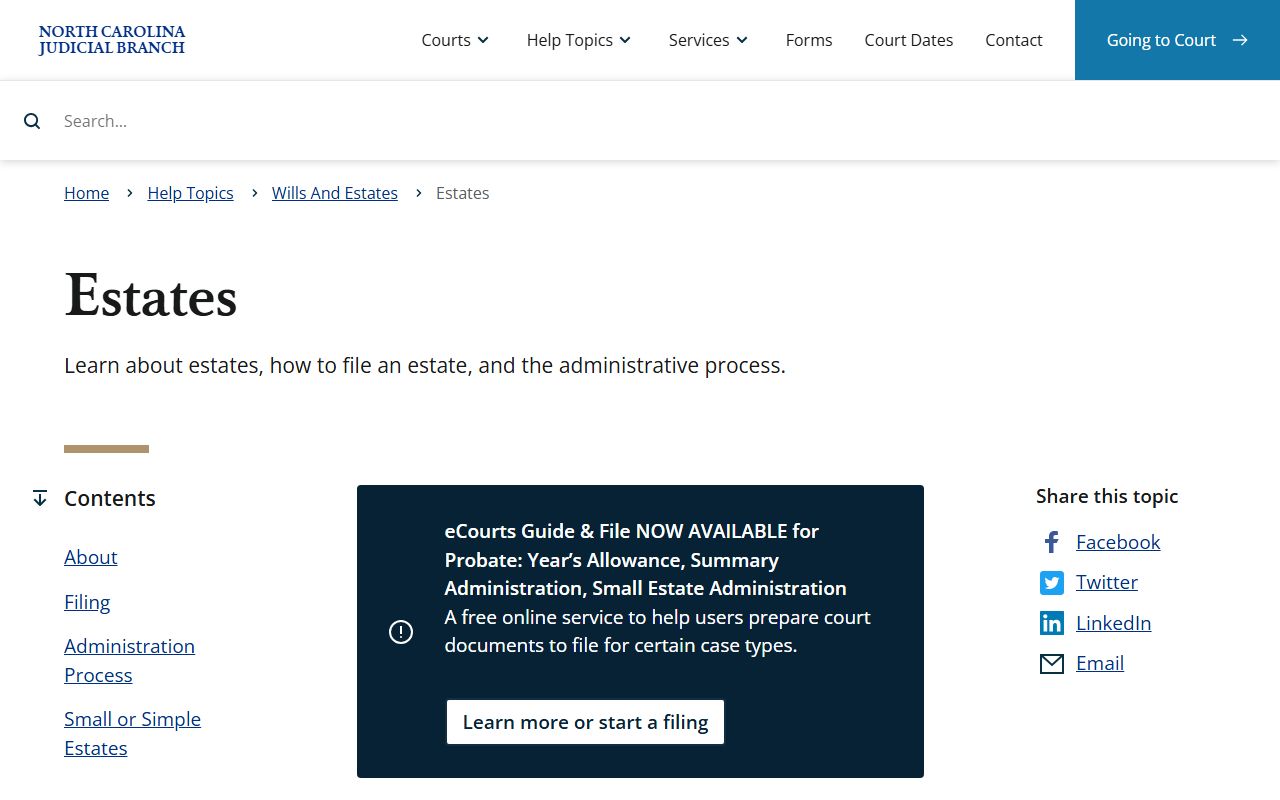
That state help topic is the best starting point for understanding the process before checking Rutherford County estate file access.
Rutherford County Probate Terms
Estate records use terms that are easy to mix up. The definitions below are general plain-language meanings for reading Rutherford County probate records. They are not a substitute for legal advice about who should file, who inherits, or what process fits a specific estate.
- Testator
- The person who made a will.
- Executor
- The personal representative named in a will to carry out the estate.
- Administrator
- The personal representative appointed when there is no will or no executor can serve.
- Intestate
- Dying without a valid will, so heirs are determined under state law.
- Guardianship
- A court-supervised role for managing the affairs of a minor or adult who needs legal protection.
- Conservatorship
- A financial management role used in some states; North Carolina materials more often use guardianship terminology for protected adults.
Search Rutherford County Probate Records
Rutherford County probate records have several access channels. The NC eCourts Portal Smart Search includes advanced filtering for Estates, and the location filter can be set to Rutherford County. Public self-service terminals at a Clerk of Court office also provide civil, special proceeding, and estates case information. When online data is too thin, the paper estate file is reviewed at the clerk's office in the county where the case is located, unless a law or order restricts access.
- Start with the NC eCourts Portal and use Smart Search with Rutherford County as the location.
- Use estate-related filters when available, such as case type, party name, filing date range, and case status.
- If the Portal does not show enough detail, use a public self-service terminal at a Clerk of Court office.
- For the complete estate file, contact or visit the Rutherford County Clerk of Superior Court where the case is filed.
- Request paper copies from clerk staff and confirm any copy or certification fee before ordering.
The North Carolina court organization and records statutes are part of the access framework for court records maintained by clerks.
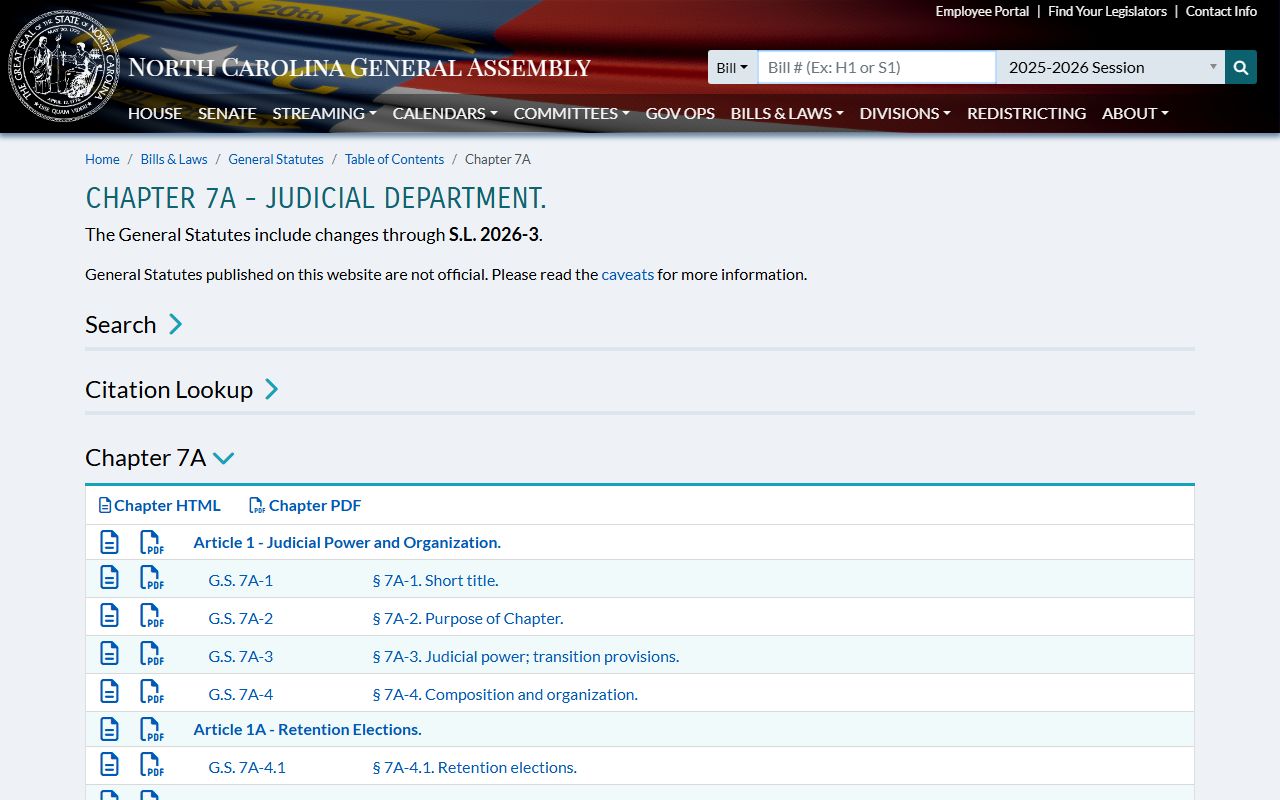
Those statutes help explain why estate records are court records, even though many searches now begin through a statewide online portal.
Rutherford County Estate Court Contact
The local probate contact is the Clerk of Superior Court / Estates Division because Rutherford County does not have a separate probate court. The same courthouse office supports Superior Court, District Court, estates, special proceedings, public terminals, paper files, and certified court copies. Use this office for estate file location, copy questions, and older probate record research.
Rutherford County Clerk of Superior Court / Estates Division
229 N Main St, Suite 203
Rutherfordton, NC 28139
828-288-6100
Monday-Friday 8:30 AM-5:00 PM
Rutherford County Probate Copy Fees
The reviewed Rutherford County probate research did not locate a local estate filing fee table or a Rutherford-specific certified-copy amount. Official court-record guidance states that paper copies are available for a fee from clerk staff. Because court costs can change and some estate filings have different cost rules, confirm the current amount with the Clerk of Superior Court before submitting a request by mail or asking for certified copies.
| Probate item | Availability or fee note |
|---|---|
| Estate file inspection | Available through the clerk file in the county of filing unless restricted. |
| Plain paper copies | Available from clerk staff for a fee; exact local amount was not published in reviewed sources. |
| Certified court copies | Available when the clerk can certify the record; confirm cost and processing method with the clerk. |
| Older estate file research | May require direct counter research through the Clerk of Superior Court. |
| Real estate instrument copies | Handled by the Register of Deeds when the record is a deed or recorded land instrument, not an estate court filing. |
Note: The fee table avoids amounts not found in the research file and points users back to the official clerk for current costs.
What Rutherford County Probate Records Show
Rutherford County probate records may include the will, application, oath, bond if required, letters testamentary or letters of administration, inventory, annual accounts, final accounts, notices to creditors, orders, receipts, and filings related to real property or creditor claims. The mix depends on the type of estate and the stage of administration. A newly opened file may have only an application and appointment documents, while a completed estate can have inventories, accountings, creditor notices, orders, and distribution receipts.
Estate records can also overlap with special proceedings and civil records. Foreclosure, partition, condemnation, judgment, lien, divorce, and estate matters may affect property but still remain court records when they arise through court proceedings. For a full search, check the estate case file and any related court case entries. For broader court history tied to the same person or property, the Rutherford County court records search path may also be needed.
- Will or no-will status, when included in the file.
- Names of the decedent, personal representative, heirs, beneficiaries, and attorneys when public.
- Letters giving authority to an executor or administrator.
- Inventory and accounting filings that describe estate assets and administration steps.
- Creditor notices, claims, receipts, orders, and final distribution filings.
Rutherford County Estate Land Records
The Register of Deeds and the Clerk of Superior Court serve different record functions. The Register of Deeds records real estate instruments, marriage certificates, marriage licenses, birth and death certificates, assumed names, military discharges, and notary records. The Clerk of Superior Court handles court files, including estates and special proceedings. When an estate involves Rutherford County land, both offices may matter.
For example, a will and letters testamentary may be in the estate court file, while a deed, deed of trust, or later real estate instrument may be in the Register of Deeds records. The estate file can show court authority and administration steps. The land record can show recorded title documents. Search both when the question involves heirs, estate transfers, foreclosure, partition, liens, or sale of real property after death.
The Rutherford County Register of Deeds marriage license page is one example of the non-court records handled outside the estates clerk file.
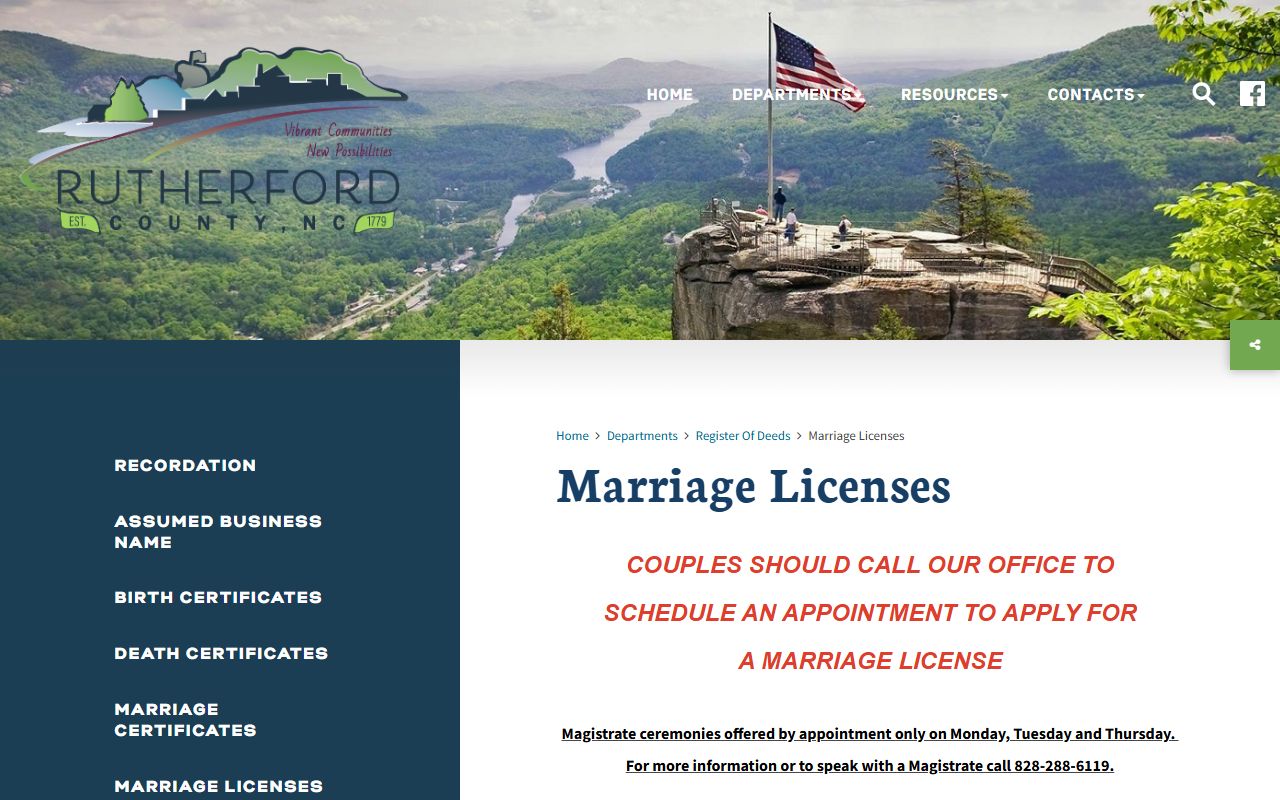
That distinction matters because a Register of Deeds record can prove a recorded event or instrument, while a probate file shows the court-supervised estate process.
Restricted Rutherford County Probate Records
Most estate files are public court records, but not every related record is open. Juvenile, adoption, mental health, and sealed matters are restricted under North Carolina access rules. Guardianship files can contain sensitive medical, financial, or personal information, and access may depend on the record type and court order. Redacted identifiers, protected dates of birth, financial account data, and sealed filings should not be expected in public Portal results.
Certificate and vital-record rules are different from estate-file rules. For example, the Register of Deeds limits who may obtain certified vital records, while plain estate file access is governed by court-record procedures. The Rutherford County marriage certificate page shows the eligibility model used for certified vital records.
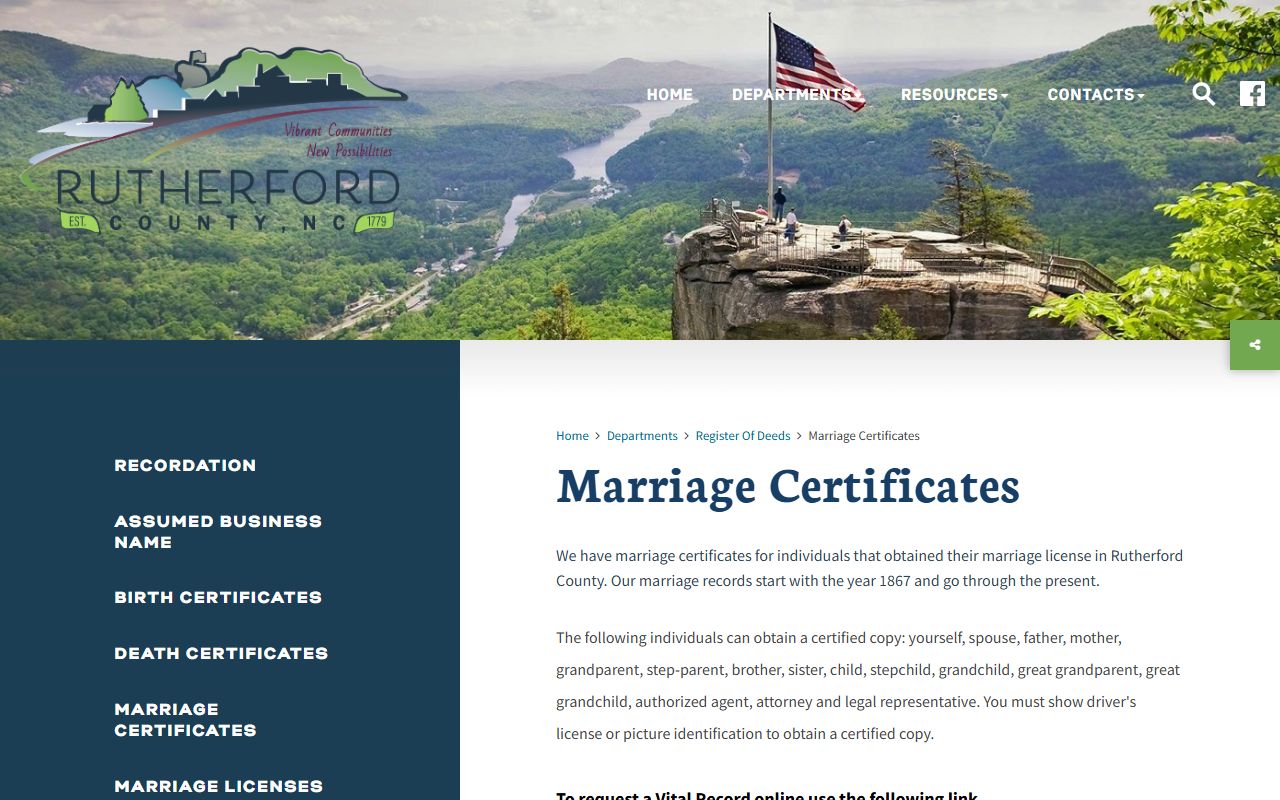
Keeping those access rules separate prevents a common mistake: treating all county records as if the same office and the same public-copy rules apply.